Santorini (Thira) National Airport

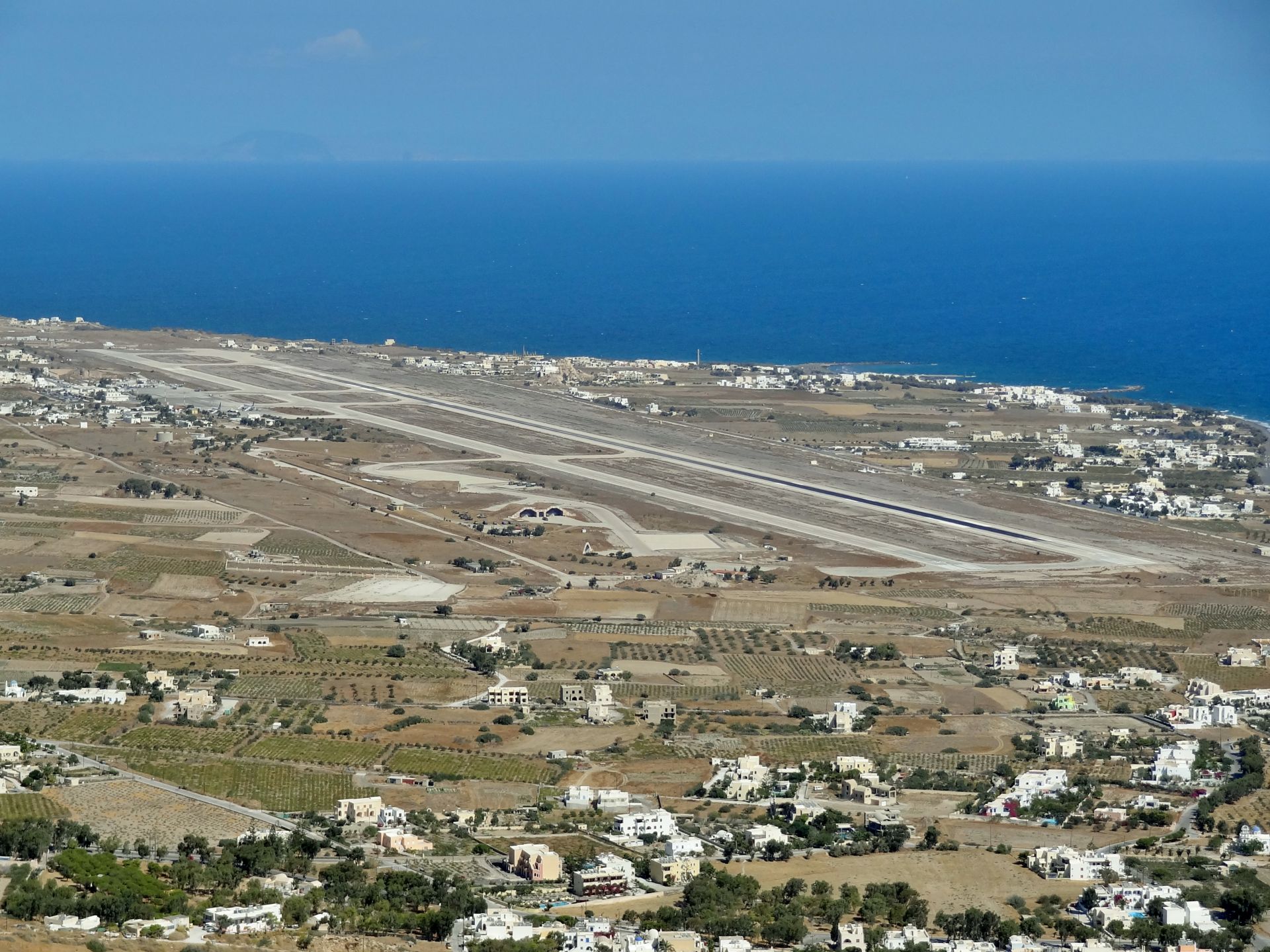
Santorini (Thira) International Airport (IATA: JTR, ICAO: LGSR) is a combined civil-military airport serving the Greek island of Santorini (Thira). It lies about 6 km southeast of Santorini’s main town, Fira, near the village of Kamari.

The airport operates a single asphalt runway, designated 16/34, which is 2,125 m (6,972 ft) long.  There is a parallel taxiway built to runway specification, although its current use is as a taxiway rather than a second runway. The airfield supports aircraft such as Boeing 757, 737, Airbus A320 series, Avro RJ, Fokker 70, and ATR 72.

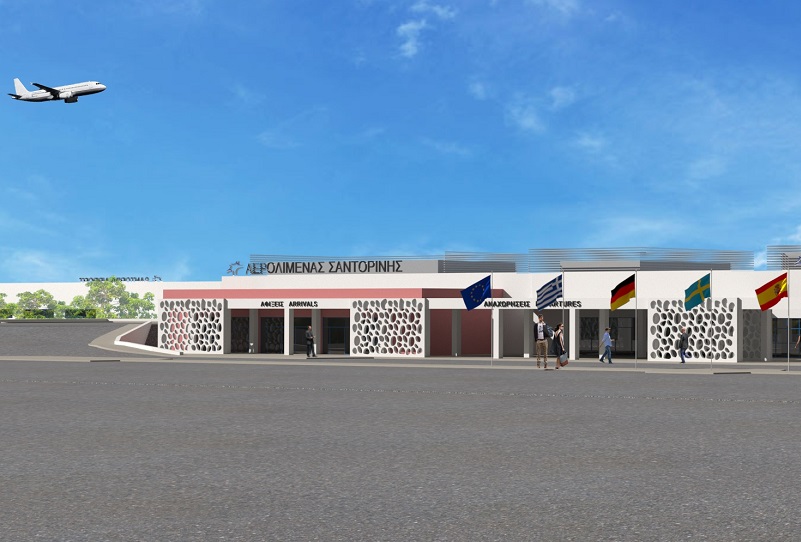
The terminal at Santorini Airport remains modest: there is just one terminal building, designed to handle both domestic and international passenger traffic. Inside, passengers can access cafés, restaurants, a duty-free shop, Wi-Fi, ATMs, and car rental services.

The airport is owned by the Greek State and operated by the Fraport Greece / Copelouzos Group joint venture.

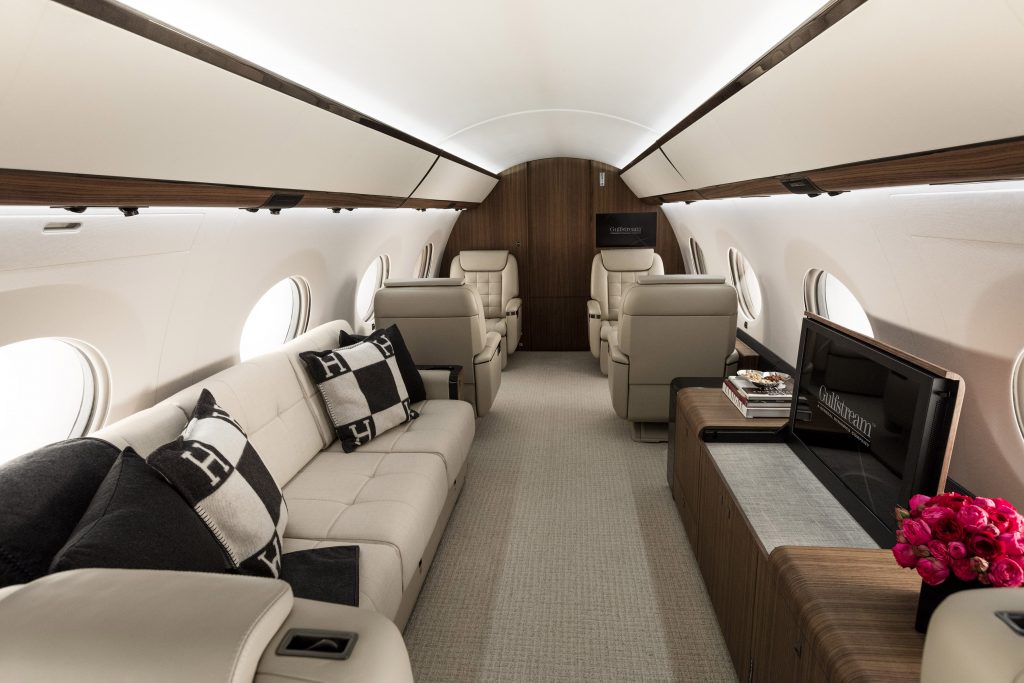
For private jet hire or more information, contact us at +30 210 996 7870 (24 HRS) or info@jets4you.net

Airport
Working Hours: summer

Monday – Sunday

00:00 to 24:00

SANTORINI (THIRA) AIRPORT HISTORY

The airport first operated in 1972

In December 2015 the privatization of Santorini (Thira) International Airport and 13 other regional airports of Greece was finalized with the signing of the agreement between the Fraport AG/Copelouzos Group joint venture and the state privatization fund. “We signed the deal today,” the head of Greece’s privatization agency HRADF, Stergios Pitsiorlas, told Reuters. According to the agreement, the joint venture will operate the 14 airports (including Santorini (Thira) International Airport) for 40 years as of 11th April 2017.

Airport Info:

Longitude: 36° 23′ 57″ N  
Latitude: 25° 28′ 45.6″ E  
Elevation: 127 ft / 39 m  
Runway Length: 2,125 m / 6,972 ft 
Runway Width: 30 m / 98 ft  
Surface: Asphalt

Santorini Airport Upgrade works

As part of its 40-year concession of the 14 regional Greek airports, Fraport Greece launched an ambitious modernization and development program. The company initially committed to minimum investments of €400 million by 2021, funding upgrades designed to enhance passenger experience and accommodate rising traffic. Over the full concession period, Fraport expects to invest up to €1 billion, depending on demand.

Santorini Airport, for example, underwent a major redevelopment. The terminal was rebuilt and expanded to 15,640 m², representing a more than 230% increase in size. The apron was reorganized, a new fire station was added, and the number of check-in counters more than doubled. Departure gates were increased, and security-lane capacity was dramatically expanded, while modern baggage-handling systems and inline security screening were installed to improve operational efficiency.

santorini-airportfraport3
santorfrap
santorini-airportFraport1

Santorini

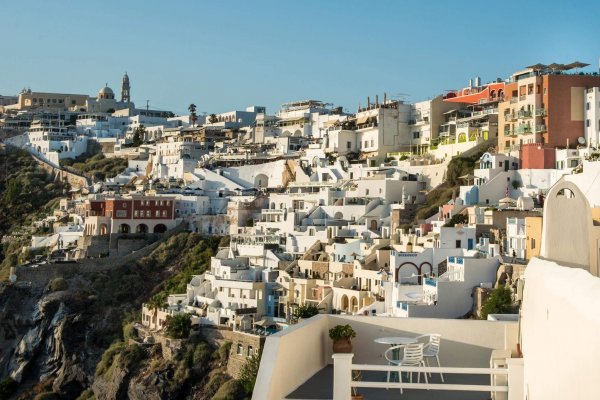
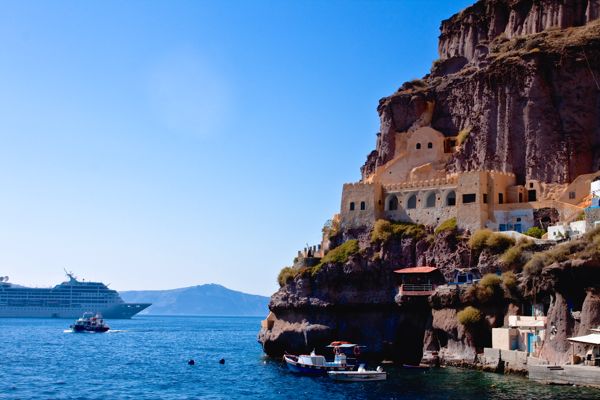
Santorini, Greece’s iconic crescent-shaped island, is famous for its fiery sunsets, whitewashed villages, volcanic beaches, and the archaeological site of Akrotiri, known as the Greek Pompeii. Its most striking feature is the flooded caldera, best viewed from the clifftop towns of Fira, Oia, and Imerovigli, perched around 1,100 feet above the Aegean. Traditional cave hotels, cliffside cafés, and restaurants offer unforgettable panoramas, while beaches like Red Beach and quiet spots like Vlychada showcase the island’s volcanic beauty. In 2025, mild seismic activity in the caldera has drawn attention, but Santorini remains a spectacular blend of nature, history, and architecture.